
Hard Novels
Review of Georges Simenon's "The Engagement" (1933)

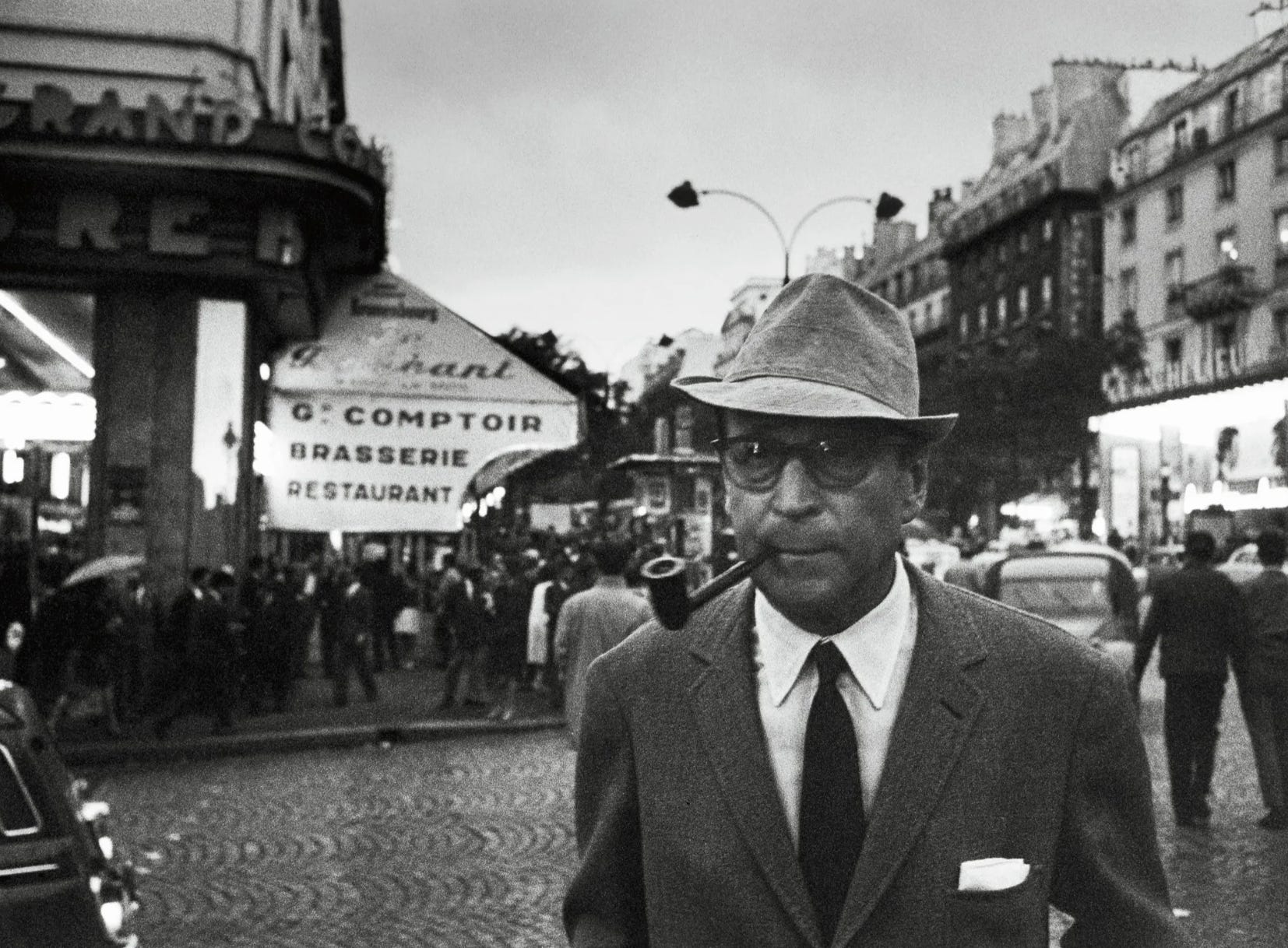
Georges Simenon. The Engagement. Trans. Anna Moschovakis. Afterword John Gray. NYRB, 2007. 135pp.
Do you want to have a bleak experience? Something disquieting that will live in your head. Gnaw at you. Leave you a little cold and frustrated. Adrift.
Then do what I did yesterday, and read this book in one sitting.
I hesitate to include too many plot details, I wouldn’t want to lessen the experience. But here’s a little context.
Simenon is best known for his Maigret character, a fictional French detective, and a wildly successful creation. Profits from the 75-novel-series set Simenon up for life. 500 million copies sold. You might think that would be enough.
But Simenon’s real passion were his roman durs. Hard novels. Dark literary fables without the consolation of the traditional detective narrative. No sense of a moral order restored. What moral order? God is surely absent here. Meaning departed too. Common humanity annihilated. Not even acknowledged.
So far, so noir, right? Not really. There’s none of the classic noir’s sense of a wholly inevitable cosmic retribution that will rain down with unerring force on the lowlife miscreants. No dime-store Calvinism.
Simenon’s roman durs are the dark twin to the entertaining turns of Maigret’s world. There are 117 of them, some yet to be translated. The Engagement is a particularly early one in the canon. First published in 1933 as Les Fiançailles de M. Hire.
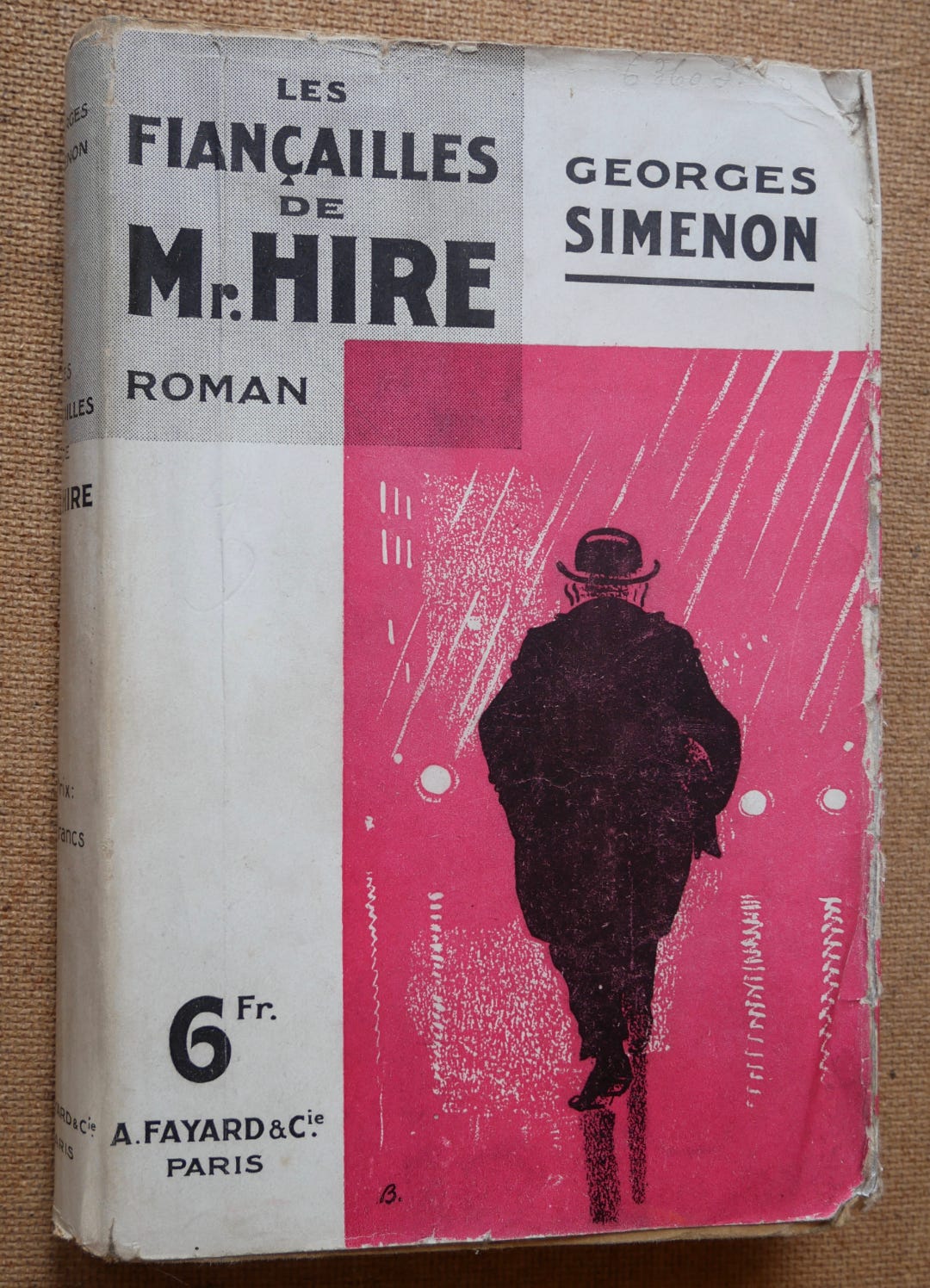
I’d venture to suggest this may be one of the earliest novels about sexual voyeurism, perhaps even the first. Simenon’s hard novels are often touted as masterpieces of psychological fiction, unflinching forensic examinations of the human mind, with a cold, unadorned economy of style. Simenon’s remarkably spare prose is certainly a good reason to read him (he really is a master), but psychology, insight, why people do what they do; forget it, there’s none of that here.
We’re locked in M. Hire’s head, but we have no idea what he’s thinking, why he acts, what his personality may be. We can hazard a guess perhaps, but you often feel Hire doesn’t even know or care, except perhaps on some instinctual, animal level. And that’s at the level of a hurt and hunted animal, not a cunning one.
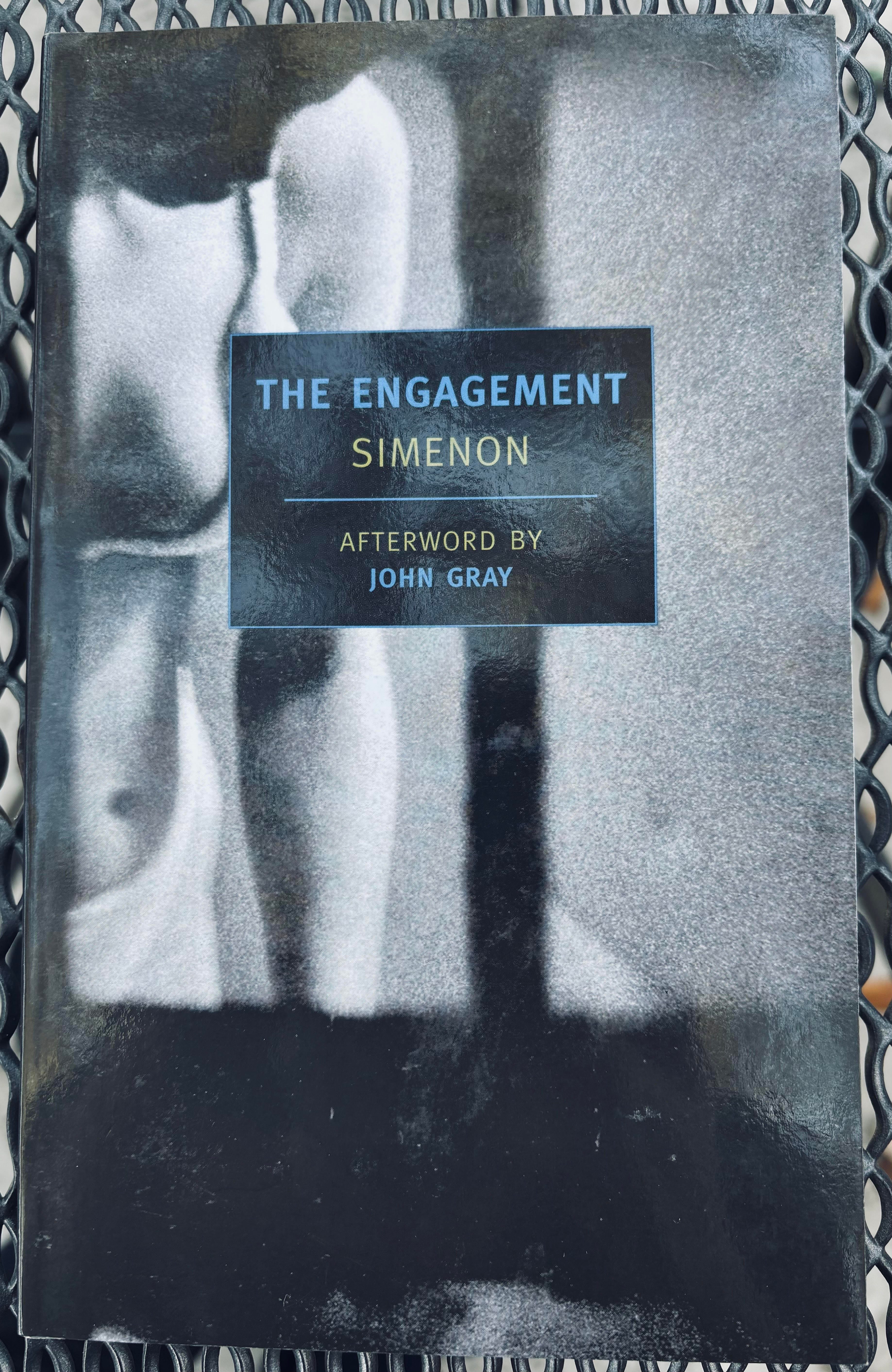
The setting of The Engagement is contemporary working class Paris. With all its ramshackle housing, blocked drains, Zola-esque slatterns, bathhouse brothels, froth and scum, crowds and transport systems, post offices, bistros, cinemas, football matches, bowling clubs, cabarets and nightclubs, with “women, mostly young, salesgirls, factory workers, typists, all of them wildly excited, talking feverishly, getting up, sitting down, dancing, running.”
A whore has been “mutilated beyond recognition” and dumped on wasteground near M. Hire’s apartment. The herd-like locals and sinister police authorities suspect Hire is the killer.
He is, after all, a man jailed for distributing pornography with the theme of flagellation, a known frequenter of prostitutes, and possessing an unusual physical appearance and singular gait. Tellingly, he is a Jew, given name “Hirovitch”. You get the feeling this is the clincher for the authorities.
There’s a strangely indefinable pain surrounding M. Hire’s background and ancestry, his stick-thin father with the white beard of a prophet, and his Armenian mother, obese, and having to be carried to her sick bed by them both. Hire reaches for the meaning, the significance of his uneasiness, but the thought is lost, everything subjugated to an almost manic desire to patrol the streets and boulevards of Paris. Never stopping. Until it ends.
A note about editions. Apparently the NYRB edition (my copy shown above, sorry for the shitty photo) is currently out of print (there’s a copy on ABE books for $240, bargain hunters!). An alternate edition, with a slightly different translation, again by Moschovakis, is in print from Penguin as “Mr. Hire’s Engagement”. I can’t imagine there’s any substantial differences between the two versions, given the solid directness of Simenon’s prose. There’s also an excellent “Audible only” audio book read by Andrew Wincott.
DISCLAIMER: All extracts are works of fiction
©Amphetamine Sulphate ©Philip Best 2026
Another title to add to my absurdly long 'Wanted Books' list. I'm always on the lookout for writers who use very spare prose effectively.
The name John Gray against the afterword on the NYRB edition got me wondering whether you read any philosophy, Philip? I can't recall you mentioning any in the past (aside from the occasional Heidegger reference).
Oath, Simenon is the master. I recommend Tropic Moon and The Pitards for his harder hits but have never read anything that misses.